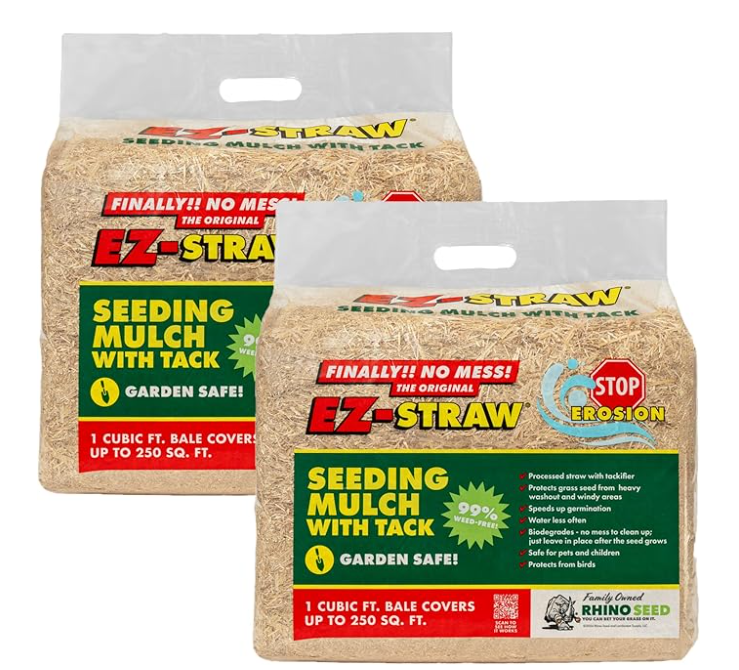
EZ Straw Seeding Mulch with Tack – Biodegradable Processed Straw, 1 cu. ft. Bale (Each Covers 250 sq. ft.), 2 Pack
- Packaging May Vary: You will receive 2 bales of straw.
- Sticks Together with Tackifier: Premium Processed Straw with a natural, biodegradable bonding agent (Tackifier) that gives straw a tackiness which holds it together.
Discover how this innovative tackified straw solution is revolutionizing erosion control, seed germination, and sustainable landscaping practices across America
Picture this: you’ve just spent hours meticulously preparing your lawn, carefully spreading grass seed across bare patches, and watering everything to perfection. Then comes the first windstorm, washing away your hard work and leaving you staring at scattered seeds and exposed soil. Sound familiar? This age-old gardening nightmare has frustrated homeowners and landscaping professionals for generations – until now.
Enter Ez Straw With Tack, a revolutionary solution that’s transforming the way we approach lawn care, erosion control, and landscaping projects. This isn’t just another garden product gathering dust on hardware store shelves; it’s a carefully engineered system that combines the natural benefits of wheat straw with cutting-edge tackifier technology to create something truly remarkable.
The story of Ez Straw With Tack begins with a simple observation: traditional straw mulch, while effective at protecting seeds and preventing erosion, has one major flaw – it doesn’t stay put. Wind, rain, and even foot traffic can scatter loose straw, leaving your carefully planned landscaping project looking like a hayfield hit by a tornado. Professional landscapers knew there had to be a better way, and thankfully, innovation stepped up to meet the challenge.
What is Ez Straw with Tack?
Ez Straw With Tack represents a quantum leap forward in mulching technology. At its core, it’s a processed wheat straw product that’s been infused with a special tackifier – a natural adhesive agent that helps the straw fibers bond together and adhere to the soil surface. Think of it as straw with superpowers, designed to stay exactly where you put it while providing all the traditional benefits of organic mulch.
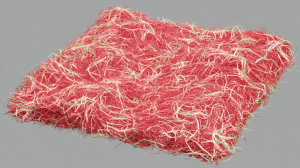
The product comes in convenient bales that expand dramatically when separated, creating a fluffy, protective blanket over your seeded areas. Unlike regular straw, which can blow away with the slightest breeze, Ez Straw With Tack forms a cohesive mat that remains stable in windy conditions while still allowing air, water, and sunlight to penetrate to the soil beneath.
What makes this product particularly ingenious is its dual-action approach. The wheat straw component provides the traditional benefits we’ve come to expect from organic mulch: moisture retention, temperature regulation, and gradual decomposition that enriches the soil. The tackifier element adds the stability factor that regular straw lacks, creating a product that’s both functional and reliable.
The manufacturing process involves carefully processing clean wheat straw and treating it with a biodegradable tackifier that activates when moistened. This means the product remains easy to handle during application but becomes increasingly cohesive as you water it in, creating a stable protective layer that won’t migrate from its intended location.
How does Ez Straw with Tack work?
The magic of Ez Straw With Tack lies in its sophisticated yet simple mechanism of action. When you first open a bale, the treated straw appears much like regular straw – loose, golden, and easy to spread. However, the moment water is introduced, the tackifier begins its work, creating bonds between individual straw pieces that transform the loose material into a cohesive protective mat.
The tackifier is a water-activated polymer that’s completely biodegradable and environmentally safe. When moisture from watering or rain contacts the treated straw, the polymer swells and becomes slightly sticky, causing the straw fibers to adhere to each other and to the soil surface. This creates a stable mulch layer that won’t blow away in high winds or wash away during heavy rains.
The beauty of this system is that it maintains the perfect balance between stability and permeability. While the straw fibers bond together to create a stable mat, the structure remains porous enough to allow water penetration, air circulation, and light filtration. Seeds beneath the Ez Straw With Tack layer receive the protection they need while still having access to the environmental factors necessary for germination and growth.
As the growing season progresses, the tackifier gradually breaks down through natural biological processes, but by this point, the grass or other vegetation has typically established enough to hold the soil in place naturally. The straw continues to decompose slowly, adding organic matter to the soil and improving its structure and fertility over time.
Temperature regulation is another crucial aspect of how Ez Straw With Tack works. The straw layer acts as insulation, moderating soil temperature fluctuations that can stress germinating seeds. During hot days, it prevents the soil surface from overheating, while during cool nights, it provides a protective barrier that maintains more stable soil temperatures.
Where can I buy Ez Straw with Tack?
Finding Ez Straw With Tack has become increasingly easy as the product’s popularity has grown among both professional landscapers and home gardening enthusiasts. The product is widely available through multiple retail channels, making it accessible regardless of your location or preferred shopping method.
Most major home improvement stores carry Ez Straw With Tack in their garden centers, particularly during peak planting seasons in spring and fall. These retailers often stock the product alongside traditional mulches and soil amendments, recognizing its growing demand among customers seeking reliable erosion control solutions.
Garden centers and nurseries have embraced Ez Straw With Tack enthusiastically, often featuring it prominently in their mulch and soil amendment sections. Many of these specialized retailers appreciate the product’s professional-grade performance and frequently recommend it to customers dealing with challenging slope stabilization or seed establishment projects.
Agricultural supply stores represent another excellent source for Ez Straw With Tack, particularly for larger-scale applications. These outlets often carry bulk quantities and may offer delivery services for substantial orders, making them ideal for contractors or property owners with extensive landscaping projects.
Online retailers have made Ez Straw With Tack more accessible than ever, with many offering convenient home delivery options. This is particularly beneficial for customers in rural areas or those who prefer the convenience of having heavy bales delivered directly to their property.
Landscaping supply companies frequently stock Ez Straw With Tack as part of their professional-grade product lines. These suppliers often cater to contractors and serious gardeners who demand reliable, high-performance materials for their projects.
How much does Ez Straw with Tack cost?
The cost of Ez Straw With Tack reflects its premium positioning as a professional-grade landscaping solution, but when you consider its performance benefits and coverage area, it represents excellent value for money. Pricing typically varies based on location, retailer, and quantity purchased, but understanding the cost structure helps you plan your landscaping budget effectively.
Individual bales of Ez Straw With Tack generally retail between fifteen and twenty-five dollars, depending on regional market conditions and retailer markup. While this represents a premium over traditional loose straw, the enhanced performance and reduced labor costs often justify the additional expense.
Bulk purchasing can significantly reduce the per-unit cost, with many suppliers offering volume discounts for customers purchasing multiple bales. Professional landscapers and property owners with large projects often find that buying in quantity provides substantial savings while ensuring consistent product availability throughout their project timeline.
The cost-effectiveness of Ez Straw With Tack becomes particularly apparent when you factor in the reduced need for reapplication. Traditional loose straw often requires multiple applications throughout a growing season as wind and weather scatter the original mulch layer. The stability provided by the tackifier typically eliminates these replacement costs, making the initial investment more economical over time.
Labor costs also factor into the overall value equation. Ez Straw With Tack applies more efficiently than traditional straw and doesn’t require the same level of ongoing maintenance, reducing the total time investment required for successful seed establishment and erosion control.
When comparing costs, it’s important to consider the coverage area provided by each bale. Ez Straw With Tack typically covers more area than equivalent amounts of traditional straw due to its expanded structure and efficient application characteristics, providing better value per square foot of coverage.
What is the purpose of the tackifier in Ez Straw?
The tackifier in Ez Straw With Tack serves multiple critical functions that transform ordinary wheat straw into a high-performance landscaping solution. Understanding these purposes helps explain why this treated straw consistently outperforms traditional mulching materials in challenging applications.
Stability enhancement represents the primary purpose of the tackifier system. Traditional loose straw has an unfortunate tendency to migrate from its intended location, particularly in windy conditions or on sloped terrain. The tackifier creates bonds between straw fibers and between the straw and soil surface, forming a cohesive mat that remains in place despite environmental challenges.
Erosion control becomes dramatically more effective with the tackifier’s bonding action. By creating a stable protective layer over the soil surface, the treated straw prevents both wind and water erosion more effectively than loose materials. This is particularly important during the critical early stages of seed germination when young plants haven’t yet developed extensive root systems to hold soil in place.
Moisture management benefits significantly from the tackifier’s presence. The bonded straw mat creates a more effective barrier against evaporation while still allowing water penetration to reach plant roots. This improved moisture retention reduces watering requirements and helps maintain more consistent soil moisture levels throughout the growing season.
Application efficiency improves substantially with tackified straw. The material spreads more evenly and consistently than loose straw, and the bonding action means you can achieve effective coverage with less material. This translates to reduced labor costs and more predictable results across different application conditions.
Weather resistance becomes a major advantage with the tackifier system. Traditional straw applications often require protection from wind during application and may need replacement after severe weather events. The tackifier ensures that your mulch investment stays put, protecting your underlying investment in soil preparation and seeding.
The tackifier also serves an important timing function in the overall system. It remains relatively inactive when dry, making the product easy to handle and apply. Once activated by moisture, it quickly forms the protective bonds that secure the mulch layer, providing immediate protection for newly planted seeds.
Is Ez Straw with Tack suitable for grass seed coverage?
Ez Straw With Tack represents an ideal solution for grass seed coverage applications, offering significant advantages over traditional mulching methods for both residential lawn renovation and large-scale turf establishment projects. The product’s design specifically addresses the challenges that make successful grass seed establishment so frustrating for many gardeners and landscaping professionals.
Seed protection stands as one of the most important benefits for grass seed applications. The stable straw mat created by Ez Straw With Tack shields germinating seeds from harsh environmental conditions that can prevent successful establishment. Wind, heavy rain, and extreme temperature fluctuations can all damage or destroy germinating grass seeds, but the protective barrier provided by the tackified straw creates a more stable microenvironment for seed development.
Moisture retention proves particularly crucial for grass seed success. Grass seeds require consistent moisture during germination, and even brief periods of drying can kill newly sprouted seedlings. The Ez Straw With Tack layer acts as a moisture-conserving blanket, reducing evaporation from the soil surface while still allowing adequate water penetration during irrigation or rainfall.
Temperature moderation provided by the straw layer helps maintain optimal conditions for grass seed germination. Extreme soil surface temperatures can prevent germination or damage emerging seedlings, but the insulating properties of Ez Straw With Tack help maintain more stable soil temperatures throughout daily temperature cycles.
Weed suppression represents an often-overlooked benefit for grass seed applications. The protective straw mat blocks light from reaching the soil surface, inhibiting the germination of weed seeds that might otherwise compete with your desired grass varieties. This gives newly planted grass seeds a competitive advantage during the critical establishment period.
Erosion prevention becomes particularly important on sloped areas where grass establishment is often most challenging. Traditional seed and straw applications on slopes frequently fail because rain washes away both seeds and protective mulch before establishment can occur. Ez Straw With Tack remains stable on slopes, protecting both seeds and soil throughout the establishment period.
Light filtration through the straw layer provides optimal conditions for grass seedling emergence. Unlike solid coverings that can block too much light, the porous structure of Ez Straw With Tack allows adequate light penetration while still providing protection from environmental extremes.
How do I apply Ez Straw with Tack?
Proper application of Ez Straw With Tack is straightforward but requires attention to specific techniques that maximize its effectiveness. The application process differs somewhat from traditional straw mulching, primarily due to the need to activate the tackifier system for optimal performance.
Site preparation forms the foundation of successful Ez Straw With Tack application. Begin by ensuring your seeded area is properly graded and that any necessary soil amendments have been incorporated. The soil surface should be firm but not compacted, providing a stable base for both seed germination and straw adhesion.
Timing considerations play a crucial role in application success. Apply Ez Straw With Tack immediately after seeding, while soil moisture levels are optimal. Avoid application during windy conditions, as even tackified straw can be difficult to manage in strong winds before the bonding system activates.
Bale preparation requires breaking apart the compressed straw to achieve optimal coverage. Each bale expands significantly when separated, so work in manageable sections to maintain control over the application process. The straw should be fluffy and well-separated before spreading, ensuring even coverage across the target area.
Spreading technique involves distributing the prepared straw evenly across the seeded surface at the recommended coverage rate. Use a consistent spreading motion to achieve uniform coverage depth, typically aiming for about seventy-five percent soil coverage. The underlying soil should remain visible through the straw layer, ensuring adequate light penetration for seed germination.
Activation process represents the critical step that distinguishes Ez Straw With Tack from traditional straw applications. Immediately after spreading, thoroughly water the area to activate the tackifier system. Use a gentle spray pattern to avoid disturbing the straw layer while ensuring complete moisture penetration. The tackifier begins working within minutes of water contact, so plan your watering pattern to cover the entire area systematically.
Coverage verification involves checking that the tackifier has activated properly throughout the application area. Properly activated Ez Straw With Tack should feel slightly sticky and demonstrate resistance to displacement when gently tested. Areas that don’t show proper bonding may need additional water application to ensure complete tackifier activation.
Post-application care focuses on maintaining optimal moisture levels for both seed germination and continued tackifier effectiveness. Regular watering should continue according to your grass seed variety’s requirements, with the understanding that the straw layer will reduce overall water needs while improving moisture retention efficiency.
How much area does Ez Straw with Tack cover?
Understanding the coverage area provided by Ez Straw With Tack is essential for planning projects and calculating material requirements accurately. The product’s unique expansion characteristics and application requirements differ from traditional straw, making proper coverage calculations crucial for both cost estimation and project success.
Standard coverage rates for Ez Straw With Tack typically range from 500 to 1,000 square feet per bale, depending on the desired application thickness and specific site conditions. This coverage area reflects the product’s efficient expansion characteristics and the optimal coverage depth recommended for most landscaping applications.
Application depth considerations significantly influence coverage calculations. For typical grass seed applications, a coverage rate that allows approximately twenty-five percent of the soil surface to remain visible through the straw layer provides optimal results. This translates to roughly one bale covering 750 to 800 square feet under normal conditions.
Slope applications may require slightly heavier coverage rates to ensure adequate erosion protection and seed stability. On slopes greater than fifteen degrees, consider reducing the coverage area to 600-700 square feet per bale to provide additional protection against washout and seed displacement.
Soil preparation quality affects coverage requirements and effectiveness. Well-prepared, level soil surfaces typically require less material to achieve adequate coverage, while rough or uneven surfaces may need additional material to ensure complete protection. Factor these conditions into your coverage calculations to avoid material shortages during application.
Environmental factors can influence optimal coverage rates. Particularly windy locations or areas subject to heavy rainfall may benefit from slightly heavier application rates, while protected areas with ideal growing conditions may achieve excellent results with standard coverage rates.
Project planning becomes more accurate when you understand that Ez Straw With Tack provides more predictable coverage than traditional loose straw. The processed nature of the material and its expansion characteristics allow for more precise material estimates, reducing both waste and the risk of running short during application.
Cost per square foot calculations become straightforward once you understand coverage rates. With typical retail pricing and standard coverage areas, Ez Straw With Tack generally costs between two and four cents per square foot of coverage, representing excellent value for the protection and performance benefits provided.
Multiple application considerations rarely arise with Ez Straw With Tack due to its stability and longevity. Unlike traditional straw that may require replacement applications throughout a growing season, the tackified product typically provides season-long protection, making initial coverage calculations more critical for long-term success.
Can Ez Straw with Tack prevent erosion?
Ez Straw With Tack excels at erosion prevention, representing one of its most valuable applications for both residential and commercial landscaping projects. The product’s unique combination of natural straw protection and tackifier stability creates an exceptionally effective erosion control system that outperforms traditional methods in challenging conditions.
Water erosion control becomes dramatically more effective with the stable mat created by Ez Straw With Tack. Traditional loose straw often washes away during the first significant rainfall, leaving soil vulnerable to erosion just when protection is most needed. The tackifier system ensures that the protective straw layer remains in place during rain events, maintaining soil protection throughout the critical establishment period.
Slope stabilization represents a particularly challenging erosion control application where Ez Straw With Tack demonstrates exceptional performance. Slopes greater than ten degrees pose significant challenges for traditional erosion control methods, as gravity works against material stability. The bonding action of the tackifier system helps overcome gravitational forces, creating a stable protective layer that remains effective even on steep slopes.
Wind erosion prevention becomes much more reliable with tackified straw applications. In arid or windy regions, traditional loose straw provides minimal protection against wind erosion because it often blows away before vegetation can establish. Ez Straw With Tack forms a cohesive surface protection that resists wind displacement while still allowing air circulation necessary for healthy soil conditions.
Channel and swale protection benefits significantly from the stability provided by Ez Straw With Tack. These drainage features experience concentrated water flow that easily displaces traditional erosion control materials. The tackified straw system provides reliable protection in these high-velocity water applications, preventing channel erosion while allowing proper drainage function.
Construction site applications represent a major market for Ez Straw With Tack erosion control capabilities. Construction activities create extensive disturbed soil areas that are highly vulnerable to erosion until permanent vegetation can be established. The product provides immediate stabilization that remains effective throughout the construction timeline, reducing environmental impact and regulatory compliance issues.
Temporary protection applications showcase the versatility of Ez Straw With Tack for erosion control. Unlike permanent erosion control structures that require removal, the biodegradable nature of the product makes it ideal for temporary applications where protection is needed only until permanent vegetation establishes.
Long-term effectiveness distinguishes Ez Straw With Tack from many alternative erosion control products. While the immediate erosion protection is excellent, the gradual decomposition of the straw adds organic matter to the soil, improving its structure and natural erosion resistance over time. This creates a transition from artificial erosion control to natural soil stability through vegetation establishment.
How long does Ez Straw with Tack take to decompose?
The decomposition timeline of Ez Straw With Tack represents a carefully engineered balance between providing adequate protection during the critical establishment period and gradually returning organic matter to the soil system. Understanding this timeline helps users plan applications and manage expectations for both protection duration and long-term soil benefits.
Initial stability period typically lasts three to six months under normal conditions, during which the tackifier maintains the straw mat’s cohesive structure while vegetation establishes. This timeframe aligns perfectly with most grass seed establishment requirements, providing protection throughout the critical early growth stages while beginning the gradual breakdown process.
Tackifier degradation occurs more rapidly than straw decomposition, typically breaking down within six to eight weeks of application. This timing is intentional, as the tackifier’s primary function is to maintain straw stability during the most vulnerable early stages of vegetation establishment. Once plants develop sufficient root systems to help stabilize soil naturally, the tackifier’s job is essentially complete.
Straw breakdown process follows natural decomposition patterns for wheat straw, typically requiring six months to two years for complete decomposition depending on climate conditions, soil moisture, and microbial activity. This gradual breakdown provides extended soil protection while slowly releasing organic matter and nutrients that benefit establishing vegetation.
Climate influences significantly impact decomposition rates. Hot, humid conditions with active soil microbiology accelerate both tackifier and straw breakdown, while cool, dry conditions slow the decomposition process. Understanding your local climate helps predict decomposition timelines for specific applications.
Moisture effects play a crucial role in decomposition timing. Consistent soil moisture promotes active microbial populations that accelerate organic matter breakdown, while dry conditions slow decomposition significantly. This relationship means that well-irrigated lawn areas typically see faster breakdown than drought-stressed applications.
Soil conditions affect decomposition rates through their influence on microbial activity. Rich, biologically active soils break down organic matter more quickly than compacted or chemically treated soils with limited biological activity. Soil pH also influences decomposition rates, with neutral pH soils generally supporting more active breakdown processes.
Beneficial timeline for most applications sees the tackifier providing stability during months one and two, followed by gradual straw breakdown during months three through twelve, with complete decomposition typically occurring within eighteen months. This timeline provides adequate protection during establishment while ensuring complete organic matter incorporation within a reasonable timeframe.
Residue management rarely becomes an issue with Ez Straw With Tack due to its complete biodegradability. Unlike synthetic erosion control materials that may leave permanent residues, the natural wheat straw and biodegradable tackifier break down completely, leaving no artificial materials in the soil system.
Is Ez Straw with Tack pet-friendly?
Pet safety represents a primary concern for many homeowners considering Ez Straw With Tack for their landscaping projects, and fortunately, the product demonstrates excellent pet-friendly characteristics that make it suitable for use in areas where dogs, cats, and other domestic animals spend time.
Natural ingredients form the foundation of Ez Straw With Tack’s pet safety profile. The primary component is clean, processed wheat straw, which poses minimal risk to pets even if ingested in small quantities. While no organic material should be consumed in large amounts, the wheat straw base represents a much safer alternative to synthetic mulching materials or chemically treated products.
Tackifier safety has been thoroughly evaluated for environmental and animal safety. The water-activated polymer used in Ez Straw With Tack is biodegradable and non-toxic, meeting stringent environmental safety standards that extend to pet safety considerations. The tackifier breaks down naturally through biological processes, eliminating any long-term accumulation concerns.
Ingestion considerations acknowledge that curious pets, particularly dogs, may sample landscaping materials during exploration or play. Small amounts of Ez Straw With Tack are unlikely to cause serious health issues, though pet owners should discourage consumption of any mulching material to prevent potential digestive upset or intestinal blockage from excessive consumption.
Skin contact safety presents minimal concerns with Ez Straw With Tack applications. The natural straw and biodegradable tackifier don’t typically cause skin irritation in pets, though individual animals may show sensitivities to any new material in their environment. Monitor pets for any unusual reactions during initial exposure periods.
Application timing can minimize pet interaction with freshly applied Ez Straw With Tack. Consider temporary restrictions on pet access to newly treated areas until the initial watering and tackifier activation process is complete. This precaution prevents pets from walking through wet tackifier before it bonds properly and reduces the likelihood of material ingestion during the application process.
Veterinary guidance should always be sought if pets consume significant quantities of any landscaping material, including Ez Straw With Tack. While the product’s natural composition minimizes toxicity concerns, excessive consumption of any fibrous material can potentially cause digestive issues that require professional evaluation.
Comparative safety positions Ez Straw With Tack favorably against many alternative landscaping products. Synthetic mulches, chemically treated materials, or products containing artificial dyes or preservatives may pose greater pet safety risks than the natural, minimally processed composition of tackified straw.
Long-term considerations support the pet-friendly nature of Ez Straw With Tack through its complete biodegradability. As the product decomposes naturally, it doesn’t introduce permanent synthetic materials into the environment where pets live and play, providing ongoing safety assurance throughout the product lifecycle.
What are the benefits of using Ez Straw with Tack?
Ez Straw With Tack offers a comprehensive array of benefits that address multiple landscaping challenges simultaneously, making it a versatile and cost-effective solution for both professional contractors and serious gardening enthusiasts. These benefits extend beyond simple mulching to encompass erosion control, moisture management, and long-term soil improvement.
Superior stability represents the most immediately apparent benefit, eliminating the frustration of mulch displacement that plagues traditional straw applications. The tackifier system ensures that your investment in soil protection and seed coverage remains exactly where you placed it, regardless of weather conditions or environmental challenges that might scatter conventional mulching materials.
Enhanced seed germination results from the optimal microenvironment created by the stable straw mat. Protected seeds experience more consistent moisture levels, moderated temperatures, and reduced environmental stress during the critical germination period. This improved environment typically results in higher germination rates and more uniform grass establishment compared to unprotected seeding.
Water conservation becomes a significant benefit through improved moisture retention characteristics. The protective straw layer reduces evaporation from the soil surface while maintaining adequate water penetration during irrigation. This efficiency typically reduces watering requirements by twenty to thirty percent while maintaining superior growing conditions.
Time savings emerge through reduced maintenance requirements and elimination of reapplication needs. Traditional loose straw often requires multiple replacements throughout a growing season, but Ez Straw With Tack typically provides season-long protection with a single application. This stability translates to reduced labor costs and more predictable project timelines.
Improved aesthetics result from the uniform, professional appearance maintained throughout the establishment period. Unlike loose straw that creates an unkempt appearance as it scatters and settles, Ez Straw With Tack maintains a neat, intentional appearance that enhances rather than detracts from landscape aesthetics during the establishment period.
Environmental benefits extend beyond immediate project success to encompass broader ecological advantages. The natural wheat straw composition supports soil biology, while the complete biodegradability ensures no permanent synthetic residues remain in the environment. As decomposition occurs, organic matter improves soil structure, water retention, and nutrient availability.
Weed suppression provides ongoing benefits throughout the establishment period and beyond. The stable straw mat blocks light more effectively than scattered traditional straw, inhibiting weed seed germination and reducing competition for newly planted grass or other desired vegetation. This weed control effect often continues even as the straw begins decomposing.
Versatile applications make Ez Straw With Tack suitable for diverse landscaping challenges, from residential lawn renovation to commercial erosion control projects. The product performs equally well on flat terrain and steep slopes, in arid and humid climates, and with various seed types and soil conditions.
Cost effectiveness emerges when comparing total project costs including materials, labor, and maintenance over the entire establishment period. While the initial material cost exceeds traditional straw, the elimination of reapplication needs and reduced maintenance requirements often result in lower total project costs.
Can Ez Straw with Tack be used for landscaping projects?
Ez Straw With Tack demonstrates exceptional versatility for a wide range of landscaping projects, extending far beyond basic grass seeding applications to encompass comprehensive landscape installation, renovation, and maintenance challenges. Professional landscapers and serious gardening enthusiasts have discovered numerous creative applications that maximize the product’s unique stability and protective characteristics.
Residential landscaping projects benefit enormously from the reliability and professional appearance provided by Ez Straw With Tack. Whether establishing new lawn areas, renovating existing turf, or creating naturalized meadow spaces, the product provides consistent protection that ensures project success while maintaining aesthetic appeal throughout the establishment period.
Commercial applications represent a growing market segment for Ez Straw With Tack, particularly in projects where appearance and reliability are crucial. Shopping centers, office complexes, and institutional landscapes require landscaping solutions that provide reliable results without ongoing maintenance issues that could affect public appearance or safety.
Slope stabilization projects showcase the product’s superior performance in challenging applications. Highway departments, municipalities, and private developers increasingly specify Ez Straw With Tack for slope protection projects where traditional methods have proven inadequate. The product’s ability to remain stable on steep grades while supporting vegetation establishment makes it ideal for infrastructure projects.
Athletic field construction and renovation projects benefit from the consistent protection and uniform establishment provided by Ez Straw With Tack. Sports field managers appreciate the product’s ability to protect newly seeded areas from traffic damage while supporting rapid, uniform turf establishment that meets demanding performance requirements.
Restoration projects in environmentally sensitive areas find Ez Straw With Tack particularly valuable due to its natural composition and reliable performance. Wetland restoration, prairie reconstruction, and habitat enhancement projects benefit from erosion protection that doesn’t introduce synthetic materials into sensitive ecosystems.
Seasonal applications demonstrate the product’s adaptability to various planting schedules and climate conditions. Spring seeding projects benefit from protection against late cold snaps and spring storms, while fall applications provide winter protection that supports early spring germination and establishment.
Garden bed preparation represents an often-overlooked application where Ez Straw With Tack provides excellent soil protection during bed development. The product maintains soil moisture and prevents erosion while protecting newly installed plantings during the establishment period.
Pathway and trail stabilization projects utilize Ez Straw With Tack to control erosion along recreational trails and maintenance pathways. The product provides immediate stabilization while supporting vegetation establishment that provides long-term trail sustainability.
Specialty seeding projects including wildflower meadows, native grass plantings, and conservation seedings benefit from the consistent protection provided by Ez Straw With Tack. These applications often involve expensive specialty seeds that require reliable protection to justify the investment in premium plant materials.
Is Ez Straw with Tack effective on slopes?
Ez Straw With Tack demonstrates exceptional effectiveness on sloped terrain, addressing one of the most challenging aspects of erosion control and vegetation establishment. Traditional mulching materials often fail on slopes due to gravitational forces and water flow patterns that cause material displacement, but the tackifier system provides the stability necessary for slope success.
Gravitational resistance represents the primary advantage of Ez Straw With Tack for slope applications. The bonding action created by the tackifier system helps overcome the natural tendency for loose materials to slide down sloped surfaces, creating a stable protective layer that maintains its position regardless of slope angle.
Slope angle considerations affect application techniques and coverage requirements but don’t eliminate the product’s effectiveness. Slopes up to thirty degrees typically require only minor adjustments to standard application procedures, while steeper slopes may benefit from slightly heavier coverage rates or specialized installation techniques to ensure optimal tackifier activation.
Water flow management becomes crucial on slopes where concentrated runoff can overwhelm traditional erosion control measures. Ez Straw With Tack maintains its protective integrity even when subjected to sheet flow conditions that would wash away conventional mulching materials, providing consistent soil protection throughout rain events.
Installation techniques for slope applications require attention to tackifier activation patterns to ensure complete bonding across the slope face. Working from top to bottom during installation and activation helps ensure proper water distribution and tackifier bonding throughout the application area.
Seed retention on slopes benefits dramatically from the stable environment created by Ez Straw With Tack. Traditional slope seeding often fails because seeds wash away before germination can occur, but the protective mat holds seeds in place while providing the environmental conditions necessary for successful establishment.
Maintenance advantages become particularly apparent on slope applications where access for maintenance or reapplication may be difficult or dangerous. The season-long stability provided by Ez Straw With Tack eliminates the need for mid-season maintenance that might be required with traditional materials.
Performance comparison studies consistently show superior establishment rates and erosion control effectiveness for Ez Straw With Tack compared to traditional straw or synthetic alternatives on sloped terrain. The product’s ability to remain stable while supporting vegetation establishment makes it particularly valuable for challenging slope applications.
Safety considerations support the use of Ez Straw With Tack on slopes by reducing the need for repeated access to steep or unstable terrain. Single-application effectiveness eliminates safety risks associated with multiple trips to maintain or replace failed erosion control materials.
Long-term slope stability improves through the successful vegetation establishment supported by Ez Straw With Tack applications. Once vegetation roots develop, they work in conjunction with the decomposing straw to create permanent slope stabilization that continues long after the original product has broken down completely.
How does Ez Straw with Tack compare to traditional straw?
The comparison between Ez Straw With Tack and traditional loose straw reveals significant performance advantages that justify the premium pricing and have driven widespread adoption among professional landscapers and serious gardening enthusiasts. These differences extend beyond simple stability to encompass application efficiency, maintenance requirements, and overall project success rates.
Stability performance represents the most obvious distinction between Ez Straw With Tack and traditional straw applications. While loose straw provides adequate protection when it stays in place, its tendency to scatter in wind or wash away during rain events often leaves protected areas vulnerable during critical establishment periods. The tackifier system eliminates these stability issues, providing consistent protection regardless of weather conditions.
Application efficiency favors Ez Straw With Tack significantly due to its processed nature and consistent expansion characteristics. Traditional straw often contains inconsistent fiber lengths, foreign materials, and compressed areas that make uniform application challenging. The processed tackified straw spreads more evenly and predictably, reducing application time and improving coverage consistency.
Coverage calculations become more reliable with Ez Straw With Tack due to the product’s consistent density and expansion characteristics. Traditional straw bales vary significantly in density and coverage potential, making accurate material estimates difficult. The standardized processing of tackified straw provides predictable coverage rates that improve project planning accuracy.
Maintenance requirements differ dramatically between the two products. Traditional straw applications often require monitoring and reapplication throughout the establishment period as weather displaces protective coverage. Ez Straw With Tack typically requires no maintenance once properly applied and activated, reducing long-term labor costs and management requirements.
Aesthetic considerations generally favor Ez Straw With Tack due to its uniform appearance and resistance to displacement. Traditional straw applications often develop an unkempt appearance as material scatters and settles unevenly, while tackified straw maintains a neat, intentional appearance throughout the establishment period.
Environmental effectiveness shows mixed results depending on specific application conditions. Traditional straw provides excellent environmental benefits when it remains in place, but its tendency to scatter reduces effectiveness in challenging conditions. Ez Straw With Tack maintains consistent environmental protection regardless of conditions, providing more reliable moisture retention and temperature moderation.
Cost comparison requires evaluation beyond initial material costs to include labor, maintenance, and replacement expenses. While Ez Straw With Tack costs more initially, the elimination of reapplication needs and reduced maintenance requirements often result in lower total project costs, particularly for challenging applications where traditional straw is likely to fail.
Decomposition patterns show similar timelines for both products, as the tackifier breaks down quickly while the wheat straw decomposes naturally over six to eighteen months. Both products provide comparable organic matter addition to soil systems, though Ez Straw With Tack provides more consistent protection during the decomposition period.
Performance reliability consistently favors Ez Straw With Tack across diverse application conditions and climate zones. Traditional straw performance varies significantly based on weather conditions and site characteristics, while the tackified product provides more predictable results regardless of environmental challenges.
The comparison ultimately demonstrates that while traditional straw remains viable for protected applications with minimal environmental challenges, Ez Straw With Tack provides superior performance and reliability for demanding applications where project success cannot be compromised by material displacement or coverage inconsistencies.
Through this comprehensive exploration of Ez Straw With Tack, we’ve uncovered a revolutionary product that addresses fundamental challenges in landscaping, erosion control, and vegetation establishment. From its innovative tackifier technology to its impressive performance on challenging slopes, this product represents a significant advancement in sustainable landscaping solutions.
The evidence clearly demonstrates that Ez Straw With Tack offers substantial advantages over traditional alternatives, providing superior stability, improved establishment success rates, and reduced maintenance requirements while maintaining complete environmental compatibility through its natural composition and biodegradable characteristics.
For landscaping professionals, property managers, and serious gardening enthusiasts seeking reliable solutions for challenging applications, Ez Straw With Tack presents a compelling combination of performance, convenience, and environmental responsibility. While the initial investment exceeds traditional straw costs, the superior reliability and reduced maintenance requirements typically result in better overall value and more predictable project outcomes.
As landscaping practices continue evolving toward more sustainable and efficient methods, products like Ez Straw With Tack point the way forward, combining traditional natural materials with innovative processing techniques to create solutions that meet modern performance demands while respecting environmental concerns. This represents the future of landscaping technology – products that work better while working more harmoniously with natural systems.